Chào mừng người học và giáo viên tiếng Anh! Tài liệu này là hướng dẫn toàn diện giúp bạn làm chủ các câu hỏi hội thoại về các mùa. Dù bạn là người mới bắt đầu chỉ đang học tên các mùa hay là người học nâng cao sẵn sàng thảo luận sâu, bạn đều sẽ tìm thấy những câu hỏi phù hợp để luyện kỹ năng nói.
Nói về thời tiết và các mùa không chỉ là chuyện xã giao, mà còn là cách giao tiếp phổ biến để kết nối, chia sẻ trải nghiệm và hiểu các nền văn hóa khác nhau. Bài viết này được thiết kế nhằm giúp bạn làm được điều đó.
Chúng tôi đã sắp xếp 300 câu hỏi độc đáo về chủ đề các mùa thành 10 chủ đề quen thuộc, từ quần áo, đồ ăn đến du lịch và nghệ thuật. Mỗi câu hỏi được phân cấp cẩn thận từ CEFR A1 (sơ cấp) đến C2 (thành thạo), giúp bạn chọn đúng trình độ và thử thách bản thân để tiến bộ.
Bạn có thể sử dụng những câu hỏi hội thoại này trong lớp học, khi luyện nói với bạn học, hoặc tự học. Mục tiêu rất đơn giản: giúp bạn nói tiếng Anh một cách tự tin về một chủ đề mà ai cũng từng trải qua. Vì vậy, hãy cùng khám phá thế giới luôn thay đổi qua các cuộc hội thoại!
Understanding of Seasons
Mục lục bài viết
A1 (Beginner)
-
How many seasons are there?
-
What is your favorite season?
-
Is it hot in summer?
-
Does it snow in winter?
-
Is it sunny in spring?
A2 (Elementary)
-
What is the weather usually like in autumn in your country?
-
Which season do you think is the most beautiful?
-
Do you like rainy days or sunny days more?
-
What season comes after winter?
-
Is it usually windy in spring where you live?
B1 (Intermediate)
-
How does the feeling of the air change from summer to autumn?
-
What are the biggest advantages and disadvantages of your favorite season?
-
How do people’s moods seem to change with the seasons in your city?
-
Describe a typical day in your least favorite season.
-
Do you prefer the long days of summer or the short days of winter? Why?
B2 (Upper-Intermediate)
-
Some people argue that spring is a season of renewal, while autumn is a season of decay. Do you agree with this perspective?
-
How has the typical weather pattern in your region changed over your lifetime, if at all?
-
Is there a “perfect” temperature or type of weather for you? Describe it and the season it’s most associated with.
-
How do seasonal transitions (e.g., from winter to spring) affect your motivation or productivity?
-
In your opinion, which season is the most overrated and why?
C1 (Advanced)
-
How do cultural representations of seasons (e.g., in poetry or film) shape our personal expectations and experiences of them?
-
Discuss the psychological concept of “seasonal affective disorder.” How significant do you believe the impact of seasons is on mental health?
-
Can the traditional four-season model accurately describe the climate patterns in all parts of the world? Where does it fall short?
-
How do the economic cycles in your country correlate with or are influenced by seasonal changes?
-
Philosophically speaking, do you view seasons as a cycle of repetition or a linear progression of unique moments? Explain your view.
C2 (Proficient)
-
To what extent do you think our modern, climate-controlled environments have fundamentally disconnected us from the visceral, biological impact of the seasons?
-
Analyze how the depiction of seasons in a specific art movement (e.g., Impressionism, Japanese ukiyo-e) reflects broader cultural values towards nature and time.
-
How might the geopolitical strategies of nations in the Arctic or Antarctic regions be uniquely dictated by the extreme seasonal variations there?
-
Discuss the potential long-term societal adaptations required if climate change leads to the blurring or disappearance of traditional seasonal boundaries in temperate zones.
-
Critique the four-season model as a human construct. Is it a useful heuristic, or does it oversimplify our understanding of planetary ecological and meteorological systems?
Activities & Hobbies by Season
A1 (Beginner)
-
Do you go swimming in summer?
-
Can you make a snowman in winter?
-
Do people go hiking in spring?
-
Is flying a kite a summer activity?
-
Do you like to stay inside in autumn?
A2 (Elementary)
-
What is a fun outdoor activity to do in summer where you live?
-
Do you prefer indoor or outdoor hobbies in winter? Why?
-
What did you do last weekend? Was it a seasonal activity?
-
Are there any special festivals or events you attend in a particular season?
-
What activity do you never do in [current season]?
B1 (Intermediate)
-
How does your social life change from season to season? Are you more or less active with friends?
-
Describe an activity that is perfect for a crisp autumn day. What makes it so suitable?
-
Have you ever taken up a new hobby because of the season? What was it and why?
-
Which season, in your opinion, offers the best variety of activities for people of all ages?
-
If you had to give up all activities associated with one season, which season would you choose and why?
B2 (Upper-Intermediate)
-
How has the popularity of certain seasonal activities (e.g., skiing, beach holidays) in your country evolved over the past few decades?
-
Some people are “summer people” and others are “winter people.” What do you think this says about a person’s personality or lifestyle preferences?
-
Discuss the pros and cons of seasonal tourism for a popular destination you know.
-
To what extent do you plan your annual calendar around specific seasonal activities or events?
-
Is there an activity you believe is underrated for a particular season? Make a case for why people should try it.
C1 (Advanced)
-
Analyze the commercialization of seasonal activities. How do marketing and consumer culture shape what we consider to be “appropriate” or “fun” for each season?
-
Discuss the concept of “seasonal identity.” Do you think the activities we engage in during different seasons contribute to different facets of our self-expression?
-
How does access to seasonal activities highlight or exacerbate socioeconomic inequalities in your society?
-
Evaluate the impact of indoor recreation (like gaming, gyms, malls) on our traditional, seasonally-dictated patterns of leisure.
-
From a psychological standpoint, why do you think humans have a deep-seated need to ritualize activities according to seasons (e.g., spring cleaning, harvest festivals)?
C2 (Proficient)
-
Could the human propensity for seasonally-specific rituals and activities be seen as a fundamental attempt to impose order and meaning on the chaos of natural time?
-
Speculate on how future advancements in biotechnology or virtual reality might completely decouple our leisure activities from traditional seasonal constraints. What would be the cultural implications?
-
Analyze how the globalization of sports and entertainment (e.g., the NFL playing in London, year-round indoor skiing) is challenging the very notion of “seasonal” activities.
-
Discuss the ethical dimensions of promoting resource-intensive seasonal activities (like snowmaking for skiing or heating large outdoor pools) in an era of climate consciousness.
-
Philosophically, is a seasonal activity more valuable or authentic because of its inherent impermanence and connection to a specific, fleeting time of year?
Clothing & Fashion for Different Seasons
A1 (Beginner)
-
Do you wear a coat in winter?
-
Is a T-shirt for summer or winter?
-
What do you wear on your feet in the rain?
-
Do you wear gloves when it is cold?
-
Is a swimsuit for summer?
A2 (Elementary)
-
What is your favorite piece of clothing to wear in autumn?
-
Do you prefer getting dressed in summer or winter? Why?
-
What do you usually wear on a cool spring day?
-
Do you have special clothes for a holiday or festival in a particular season?
-
Is it important to wear a hat in summer? Why or why not?
B1 (Intermediate)
-
How does the process of changing your wardrobe from one season to another work? Do you pack clothes away?
-
Describe the perfect outfit for a windy, rainy day in late autumn.
-
What are the biggest challenges of dressing for the season where you live? (e.g., humidity, sudden temperature changes)
-
Some people love “layering” clothes in spring and autumn. Do you enjoy this? Why or why not?
-
How important is fashion versus pure functionality when you choose your seasonal clothes?
B2 (Upper-Intermediate)
-
How do fashion trends typically differ between the Spring/Summer and Autumn/Winter collections in the industry?
-
Discuss the concept of “seasonal color analysis” in fashion. Do you think certain colors are inherently better suited to specific seasons or complexions?
-
How has the rise of “fast fashion” affected the traditional idea of having separate seasonal wardrobes?
-
Is there a particular season where you feel your personal style is expressed best through clothing? Why do you think that is?
-
How do workplace dress codes interact with extreme seasonal weather? Should they be more flexible?
C1 (Advanced)
-
Analyze the environmental impact of the global fashion industry’s relentless seasonal cycles. What are the main criticisms?
-
How do clothing norms for different seasons reflect and reinforce cultural values around modesty, leisure, and professionalism?
-
Discuss the psychological relationship between wearing seasonal colors/textures (e.g., pastels in spring, dark wools in winter) and our mood or mindset.
-
How is the traditional fashion calendar being disrupted by global supply chains and the constant demand for newness?
-
To what extent is the very idea of “dressing for the season” a privilege dependent on having adequate storage space and financial resources for multiple wardrobes?
C2 (Proficient)
-
Could the drive for seasonal fashion be viewed as a form of planned obsolescence, psychologically engineered to create perpetual dissatisfaction and consumption?
-
Speculate on the future of “smart” seasonal clothing integrated with biotechnology for climate adaptation. What ethical dilemmas might arise from such wearable technology?
-
Critically assess the argument that, in a globalized world, the concept of geographically-bound seasonal clothing is becoming an archaic relic.
-
How do indigenous and traditional clothing practices, often deeply tied to specific environments and seasons, challenge the homogenizing forces of global fast fashion?
-
In an era of climate change where seasonal patterns are becoming less predictable, how might our fundamental relationship with functional clothing—as a protective interface with the environment—need to evolve?
Food, Holidays, and Cultural Traditions
A1 (Beginner)
-
Do you eat ice cream in summer?
-
Is Christmas in winter?
-
Do people eat soup when it is cold?
-
Are pumpkins for autumn?
-
Do you have a birthday in spring, summer, autumn, or winter?
A2 (Elementary)
-
What is a special food your family eats during a holiday in winter?
-
Do you prefer summer fruits or winter vegetables?
-
What holiday or festival do you enjoy most? What season is it in?
-
Is there a food or drink that you only have in one specific season?
-
Do you help prepare special food for a seasonal holiday?
B1 (Intermediate)
-
Describe a traditional dish from your country that is strongly associated with a particular season. What is in it?
-
How do the holidays in the colder months differ in atmosphere from those in the warmer months in your culture?
-
Have any seasonal traditions in your family or country changed over time? How?
-
What is the role of food in making a seasonal holiday special?
-
If you could experience a holiday from another season at a different time of year (e.g., Christmas in July), would you want to? Why or why not?
B2 (Upper-Intermediate)
-
Discuss how globalization has affected traditional seasonal foods and holidays in your country. Are there any noticeable effects?
-
“Seasonal eating” (eating produce that is locally in season) is a growing trend. What are its practical and philosophical benefits?
-
How do seasonal holidays reinforce a sense of community or national identity?
-
To what extent have seasonal holidays become overly commercialized? Does this detract from their original meaning?
-
Can you compare and contrast two major holidays from different seasons in your culture in terms of their social rituals and emotional tone?
C1 (Advanced)
-
Analyze the origins of a major seasonal holiday in your culture. How have its traditions evolved from their agricultural, religious, or pagan roots?
-
Discuss the concept of “food miles” and the environmental ethics of consuming out-of-season produce year-round.
-
How do seasonal celebrations act as a collective cultural mechanism for marking the passage of time and creating shared memory?
-
Evaluate the tension between preserving authentic traditional foods and adapting them for modern tastes and convenience.
-
In a multicultural society, how do seasonal traditions from different cultures interact, blend, or sometimes clash?
C2 (Proficient)
-
Could the modern detachment from agricultural cycles be leading to a profound “seasonal disorientation,” where holidays lose their ancestral connection to land and climate?
-
Speculate on the future of major seasonal holidays in a potential post-religious or fully secular global society. What core human needs might they still fulfill?
-
Analyze how the global export of seasonal festivities (like Halloween or Valentine’s Day) often strips them of cultural context and repackages them as consumerist rituals. Is this cultural exchange or cultural erosion?
-
Discuss the role of “invented traditions” in creating new seasonal rituals for modern, urban populations disconnected from nature’s rhythms.
-
Philosophically, are seasonal traditions more valuable for their historical authenticity or for their present-day function in fostering social cohesion and personal joy?
Nature, Environment, and Science of Seasons
A1 (Beginner)
-
Do leaves fall from trees in autumn?
-
Are there more flowers in spring or winter?
-
Do birds sing in summer?
-
Is the grass green in spring?
-
Do bears sleep in winter?
A2 (Elementary)
-
What animals do you see more often in summer where you live?
-
What happens to plants in winter?
-
Why do you think the days are longer in summer?
-
What is your favorite thing to see in nature during spring?
-
Is the ocean or a lake different in summer than in winter? How?
B1 (Intermediate)
-
Explain in simple terms why we have different seasons on Earth.
-
How do migrating animals know when it’s time to travel to a different place for a new season?
-
What are some positive and negative effects of a very rainy spring or a very dry summer on the local environment?
-
How has the natural landscape in your area changed from season to season throughout your life?
-
What does the phrase “the circle of life” mean in the context of seasons and nature?
B2 (Upper-Intermediate)
-
Discuss the phenomenon of “false spring” or unseasonably warm weather in late winter. What impact can this have on ecosystems?
-
How do predators and prey populations typically fluctuate in relation to seasonal abundance and scarcity?
-
Analyze the role of seasonal changes in major global climate patterns, such as monsoons or hurricane seasons.
-
How is agricultural planning deeply tied to an intimate understanding of seasonal cycles? Provide an example.
-
What are the arguments for and against human interventions like cloud seeding or artificial snowmaking to alter local seasonal conditions?
C1 (Advanced)
-
Analyze the evidence for and implications of phenological shifts—changes in the timing of natural events like flowering or bird migration—due to climate change.
-
Discuss the concept of “seasonal lag.” Why are the hottest and coldest days of the year usually after the solstices?
-
How do ocean currents and their seasonal variations influence weather patterns on a continental scale?
-
Evaluate the scientific and ethical challenges of “assisted migration” for species that cannot adapt their ranges fast enough to keep pace with shifting seasonal climates.
-
What is the “urban heat island” effect and how does it modify seasonal temperature patterns in cities compared to surrounding rural areas?
C2 (Proficient)
-
Speculate on how the concept of seasons might manifest on other planets or moons with different axial tilts, orbital eccentricities, and atmospheric compositions.
-
Critically assess the “Anthropocene” hypothesis in the context of seasons. Have human activities fundamentally altered Earth’s seasonal cycles to the point of creating a new geological epoch?
-
Discuss the potential for geoengineering solutions, like solar radiation management, to intentionally modify seasonal patterns as a climate change mitigation strategy. What are the potential global risks?
-
How does the study of paleoclimatology—understanding ancient seasons through ice cores, tree rings, and sediment layers—inform our models of future climate scenarios?
-
In the very long term, as the Sun’s luminosity gradually increases, how will Earth’s seasonal cycles be fundamentally transformed, and what are the implications for the continuation of complex life?
Memories, Feelings, and Personal Preferences
A1 (Beginner)
-
Are you happy in summer?
-
Do you have a good memory from winter?
-
Is spring a sad season?
-
Do you like the smell of autumn?
-
Which season has your birthday?
A2 (Elementary)
-
What did you enjoy most about last summer (or the last summer you remember)?
-
What is one thing you don’t like about your least favorite season?
-
How do you feel on the first warm day of spring?
-
Do you have a favorite photo from a particular season? What is in the photo?
-
What season do you think is the most romantic? Why?
B1 (Intermediate)
-
Describe your most vivid childhood memory associated with a specific season. What makes it so memorable?
-
How does your energy level or general mood fluctuate with the changing seasons?
-
Do you associate certain smells or sounds with a particular season? What are they?
-
If you could erase one season from the year completely, which would it be and what would you miss (if anything) about it?
-
What season do you feel you are most “yourself” in? Why do you think that is?
B2 (Upper-Intermediate)
-
Discuss the concept of “nostalgia” and why certain seasons seem to trigger it more powerfully than others.
-
How do your goals or personal projects tend to align with different seasons? (e.g., starting new things in spring, reflecting in autumn)
-
To what extent do you think our seasonal preferences are shaped by our positive or negative core memories from childhood?
-
Some people experience a sense of melancholy or “existential weight” during a particular season. Have you ever felt this? How would you describe it?
-
If your personality were a season, which one would it be and why? Justify your choice with personal traits.
C1 (Advanced)
-
Analyze how the changing quality of light in different seasons can influence artistic expression, perception, and even psychological states like creativity or introspection.
-
Discuss the idea of “seasonal identity” as a fluid concept. Do you consciously or unconsciously adopt slightly different social personas or habits in different seasons?
-
How reliable are our seasonal memories? Do we tend to idealize summers past or dramatize difficult winters in our recollection?
-
Explore the relationship between seasonal affective disorder (SAD) and the broader human need for rhythm, light, and cyclical change in our lives.
-
In what ways can the conscious appreciation of each season’s unique offerings be considered a form of mindfulness or a practice for cultivating contentment?
C2 (Proficient)
-
Could the deep emotional resonance of seasons be tied to humanity’s ancient, biological connection to celestial cycles and the precariousness of survival in pre-modern times?
-
Philosophically, is nostalgia for a past season a longing for a lost time, a lost version of oneself, or simply a sensory memory? Can we truly separate these?
-
Discuss the concept of “internal seasons” within a human lifespan (e.g., spring of youth, winter of old age). Is this metaphor a helpful or limiting way to view aging?
-
How does the modern experience of time as linear and productivity-focused conflict with the cyclical, rhythmic time embodied by the seasons? What is lost in this conflict?
-
If memories are the stories we tell ourselves, how do the seasons provide the fundamental chapters and settings for the narrative of our lives?
Travel and Seasonal Destinations
A1 (Beginner)
-
Do people go to the beach in summer?
-
Is skiing a winter holiday?
-
Do you visit gardens in spring?
-
Can you see autumn leaves on a trip?
-
Do you like to travel in [current season]?
A2 (Elementary)
-
Where is a good place to visit in your country in summer?
-
Have you ever traveled to see snow in winter? Where did you go?
-
What is the best season for camping, in your opinion?
-
Do you prefer to travel when it is hot or cold? Why?
-
Is your city a good place for tourists in autumn? What can they see?
B1 (Intermediate)
-
Describe your ideal one-week holiday for each season. Where would you go and what would you do?
-
What are the advantages and disadvantages of traveling during the peak tourist season for a popular destination?
-
Have you ever been “out of season” to a tourist spot? What was it like?
-
How important is the weather when you plan a trip? Does it ever make you change your destination?
-
What is a destination you think is overrated in its most popular season? When would be a better time to go?
B2 (Upper-Intermediate)
-
Discuss the concept of “shoulder season” travel. Why is it becoming more popular, and what does it mean for local economies?
-
How does overtourism during a specific season damage natural or cultural sites? Can you think of an example?
-
To what extent should travelers consider their carbon footprint when choosing a seasonal destination or mode of transport (e.g., flying to a ski resort)?
-
How does the experience of visiting a city for its major seasonal festival contrast with visiting during the “off” season to observe daily life?
-
How has the rise of remote work and “digital nomadism” changed traditional patterns of seasonal travel and tourism?
C1 (Advanced)
-
How is climate change directly altering the traditional seasonal viability of certain destinations, such as shortening ski seasons or affecting tropical diving?
-
What are the ethical implications of “last-chance tourism,” where people travel to see natural wonders before they disappear due to seasonal instability?
-
How do the seasonal migration patterns of wealthy tourists impact the housing markets and social fabric of both their home and destination communities?
-
How can economies that are dependent on a single season for tourism revenue achieve long-term sustainability?
-
To what extent is the modern desire to escape one’s own season a rejection of local cyclical living, and what are its cultural and environmental costs?
C2 (Proficient)
-
How might the geopolitical strategies of nations with economies critically tied to seasonal tourism, like island nations, need to evolve in the face of climate-induced seasonal disruption?
-
In a future of advanced virtual reality, could simulated seasonal travel experiences become a morally preferable alternative to physical travel, mitigating overtourism and environmental damage?
-
How does the phenomenon of “seasonal gentrification” by international visitors create complex, often neocolonial, dependencies between host and guest communities?
-
Could the very concept of a “destination season” be rendered obsolete by a globalized, climate-controlled hospitality industry that promises perfect weather year-round, and what would be lost?
-
How does the traveler’s pursuit of an “eternal summer” or “endless winter” through constant global movement reflect a deeper, philosophical anxiety about impermanence and natural cycles?
Work, School, and Daily Life
A1 (Beginner)
-
Do you go to school in the summer?
-
Is work the same in every season?
-
Do you wake up earlier in summer?
-
Are the days shorter in winter?
-
Do you have more free time in a particular season?
A2 (Elementary)
-
How does your daily routine change from winter to summer?
-
What season is the busiest for you at work or school?
-
Do you have seasonal chores at home, like gardening in spring or clearing leaves in autumn?
-
Is it easier or harder to get out of bed in the morning in winter? Why?
-
Does your family spend more time together inside during a particular season?
B1 (Intermediate)
-
How does the seasonal weather affect your commute to work or school?
-
In which season do you feel most productive or focused? Why do you think that is?
-
What are the challenges of working or studying outdoors during your least favorite season?
-
How do public holidays in different seasons break up the rhythm of your work or study year?
-
If you could design a four-day workweek, would you make it the same all year or adapt it to the seasons? How would you adapt it?
B2 (Upper-Intermediate)
-
How do certain industries, like construction, agriculture, or retail, experience predictable boom and bust cycles tied directly to the seasons?
-
Should companies and schools more formally adopt flexible schedules or “seasonal working hours” to align with natural light and human energy levels?
-
What are the social and economic impacts of a major city’s “slow season” when tourism or business activity dramatically decreases?
-
How has the ability to work remotely altered the traditional relationship between where people live and the local climate they must endure for work?
-
Is the traditional school calendar, with a long summer break, still fit for purpose in a modern, post-agrarian society?
C1 (Advanced)
-
How do national economic indicators like GDP often show seasonal adjustments, and what does this reveal about our foundational economic dependencies?
-
In what ways can intense seasonal work, such as in fishing or harvesting, create unique community structures and cultural identities around periods of intense labor and rest?
-
How might the growing prevalence of seasonal affective disorder (SAD) in northern latitudes influence future corporate wellness policies and office design?
-
Could the concept of a universal basic income (UBI) fundamentally change how societies manage seasonal unemployment in certain sectors?
-
How is the “gig economy” transforming seasonal work, and what are the implications for job security and workers’ rights?
C2 (Proficient)
-
How deeply is the modern global economic system, with its quarterly reporting and constant growth demands, fundamentally at odds with the natural, cyclical rhythms of seasonal production and renewal?
-
Could re-localizing economies and re-synchronizing work schedules with regional seasonal patterns be a viable strategy for increasing community resilience and sustainability?
-
What might a post-work society, freed from labor constraints, choose to do with the distinct qualitative time offered by each season?
-
How does the artificial, seasonless environment of the modern office or factory represent the ultimate human attempt to conquer and control natural time for productivity’s sake?
-
In the long arc of human history, how has the relationship between daily labor and the seasons shifted from one of necessary symbiosis to one of managed inconvenience?
Art, Music, and Media Inspired by Seasons
A1 (Beginner)
-
Is a song about snow a winter song?
-
Do you see flowers in a spring painting?
-
Are Halloween movies for autumn?
-
Is a sunny scene in a movie usually summer?
-
Do you read books about different seasons?
A2 (Elementary)
-
Can you name a movie that happens mostly in summer?
-
What kind of music do you like to listen to on a rainy autumn day?
-
Do you prefer bright colors or dark colors in paintings of seasons?
-
Is there a story or book you associate with a particular season?
-
Do you watch different types of TV shows in winter than in summer?
B1 (Intermediate)
-
How do filmmakers use weather and lighting to show the audience what season it is in a movie?
-
How can you describe the mood or feeling of a piece of music that you think perfectly captures the essence of winter?
-
Why do you think so many love stories are set in summer or spring in movies and books?
-
How does the genre of a story (e.g., horror, romance, adventure) often connect to a specific seasonal setting?
-
If you were to make a short film about your favorite season, what would the main feeling or message be?
B2 (Upper-Intermediate)
-
How has the symbolic meaning of “spring” in Western art—often representing rebirth and youth—been used or subverted in modern media?
-
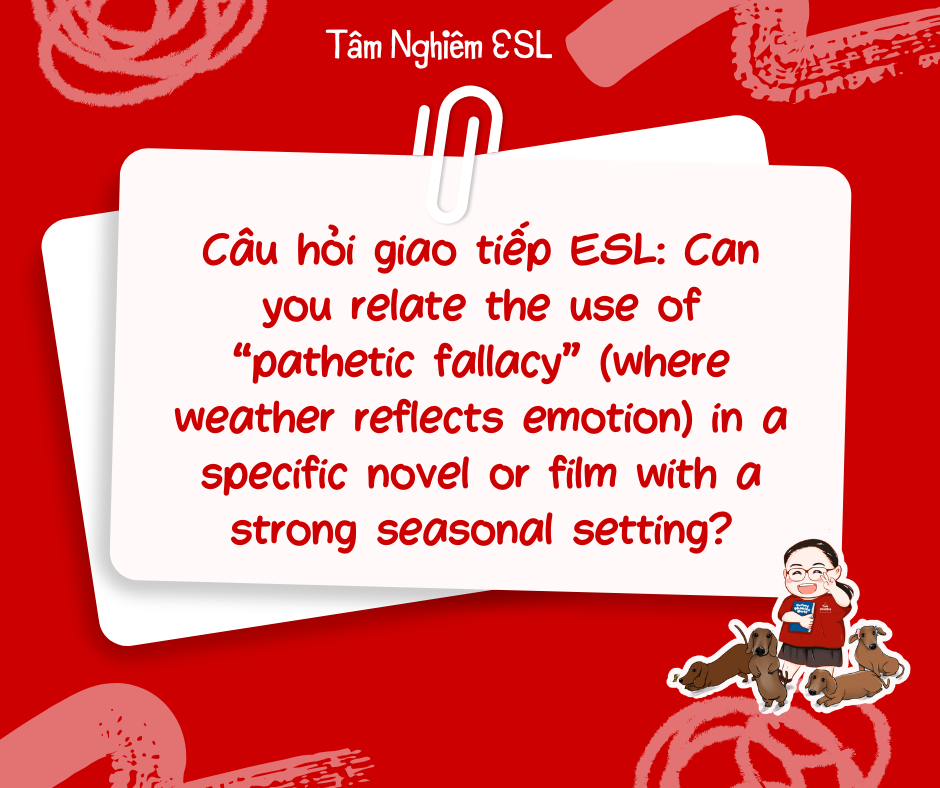
Can you relate the use of “pathetic fallacy” (where weather reflects emotion) in a specific novel or film with a strong seasonal setting?
-
How do video games use seasonal cycles not just as scenery, but as core gameplay mechanics that affect the story and world?
-
Why is autumn so frequently associated with mystery, nostalgia, and stories about change in literature and film?
-
Can you think of an example where an artist or director used a season in an unexpected or ironic way to challenge the audience’s expectations?
C1 (Advanced)
-
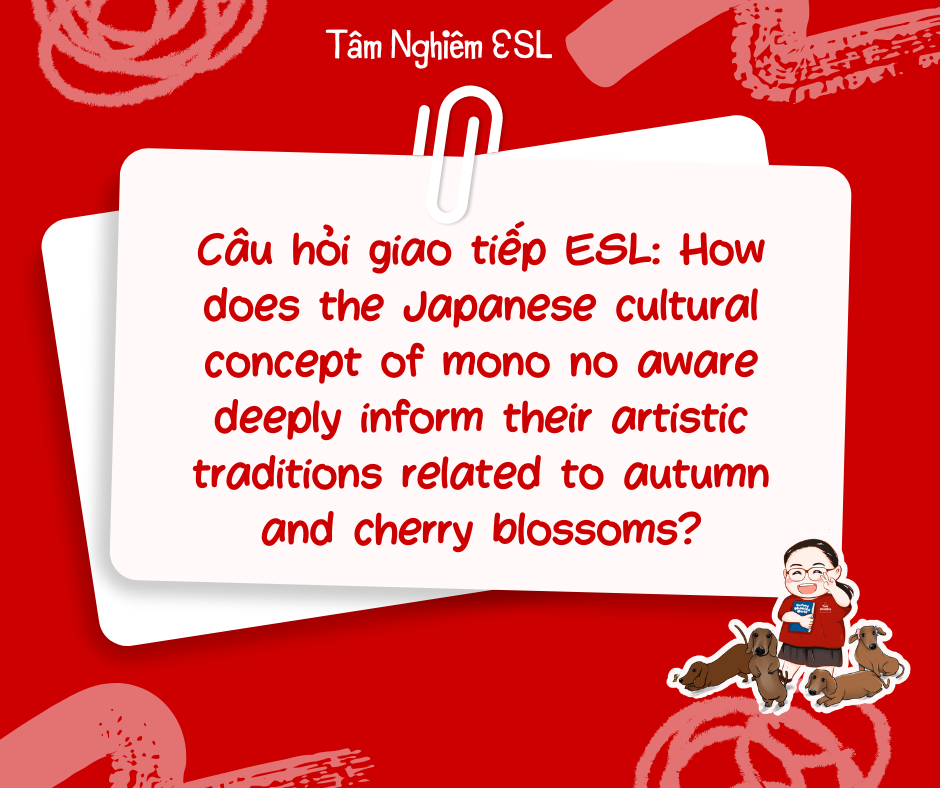
How does the Japanese cultural concept of mono no aware (a sensitivity to the impermanence of things) deeply inform their artistic traditions related to autumn and cherry blossoms?
-
In what ways can the relentless commercial use of seasonal imagery in advertising create a shallow, clichéd understanding of the seasons, stripping them of deeper meaning?
-
How did the Romantic art movement of the 19th century fundamentally shift the portrayal of seasons in art from mere background to a powerful, sublime force reflecting human emotion?
-
How does the cyclical, seasonal structure of many classical musical compositions (like Vivaldi’s The Four Seasons) mirror the cyclical nature of the subject matter itself?
-
To what extent is an artist’s portrayal of a season always a subjective construction, reflecting their inner world more than an objective reality?
C2 (Proficient)
-
How does the very attempt to represent a season in a static medium like painting or photography inevitably fail to capture its essence as a temporal, experiential process?
-
Could the postmodern fragmentation of grand narratives be linked to the decline of the unified, symbolic seasonal cycle as a dominant framework in contemporary art and literature?
-
How might generative AI art, which can create any seasonal scene on command, alter our fundamental relationship to seasonally-inspired art as a product of specific human experience and observation?
-
In an era of climate crisis, can art that nostalgically depicts stable, predictable seasonal cycles be seen as a form of denial, or does it serve a crucial role as an archive of a lost world?
-
Does the ultimate artistic challenge lie not in depicting a season itself, but in evoking the profound human awareness of seasonal transition—the poignant feeling of standing on the threshold between one state and another?
Changes and Choices
A1 (Beginner)
-
If you could have only two seasons, which would you choose?
-
Would you like a winter birthday or a summer birthday?
-
Is it good to have four seasons?
-
Can a tree have leaves in all seasons?
-
Would you like to live where it is always summer?
A2 (Elementary)
-
If you could visit any country in its summer, where would you go?
-
What would you do if you woke up and it was snowing in July?
-
Do you think seasons are the same all over the world?
-
If you could rename the seasons, what fun names would you choose?
-
Would you prefer a place with very mild seasons or very extreme seasons?
B1 (Intermediate)
-
If you had to move to a country with a completely different seasonal pattern than your own (e.g., from a four-season climate to a wet/dry season climate), what do you think would be the biggest adjustment?
-
How would daily life change if the length of daylight did not change with the seasons?
-
Do you think experiencing distinct seasons makes people more appreciative of change and variety in life? Why or why not?
-
Imagine you are designing a perfect city. How would you plan its public spaces to be enjoyed in every season?
-
If seasons were a person, which season would be the most generous friend and which would be the most challenging?
B2 (Upper-Intermediate)
-
Should countries near the equator that don’t experience the traditional four seasons adopt the concept for cultural or economic reasons (like aligning with global business calendars)?
-
How might human culture and mythology be different if Earth had no axial tilt and therefore no seasons?
-
Is the human tendency to romanticize or dread upcoming seasons a helpful psychological tool for coping with time, or does it prevent us from living in the present moment?
-
If you could implement one major urban or national policy to improve people’s quality of life during the most difficult season in your region, what would it be?
-
How does the experience of immigrants, moving from one seasonal pattern to another, illustrate the deep, often subconscious, connection between climate and cultural identity?
C1 (Advanced)
-
How might the increasing frequency of “seasonal anomalies” due to climate change force us to reconsider the foundational role seasons play in structuring agricultural, legal, and cultural systems worldwide?
-
If scientific advances allowed for the safe and equitable geoengineering of regional climates, would there be an ethical case for eliminating harsh seasons to reduce human suffering and economic cost?
-
How do diaspora communities maintain and transform their traditional seasonal rituals in climates radically different from their homelands, and what does this process reveal about cultural adaptation?
-
Could the historical expansion of empires from temperate zones have been influenced by a subconscious drive to control territories with similar, manageable seasonal cycles?
-
In a globally connected world, is the parochial experience of “local seasons” becoming an outdated concept, replaced by a homogenized, mediated experience of global weather patterns?
C2 (Proficient)
-
If a future generation were born on a spaceship or another planet with no natural seasons, what fundamental aspects of human psychology, art, and social organization might never develop?
-
Could the cyclical model of seasons be a cognitive trap that prevents humanity from envisioning truly linear progress or a sustainable, steady-state relationship with the planet?
-
How would international law and the concept of “climate refugees” need to evolve if entire regions became uninhabitable due to the loss of predictable, viable seasonal patterns?
-
If you could inscribe a message about Earth’s seasons into a time capsule for an advanced alien civilization, what single, essential truth about their role in shaping human consciousness would you convey?
-
In the ultimate analysis, are seasons a fundamental characteristic of a living planet, and therefore, is their detection a primary criterion in our search for extraterrestrial life?
Chúc mừng bạn đã khám phá toàn bộ 300 câu hỏi hội thoại về các mùa! Bạn đã cùng nhau đi qua nhiều chủ đề như thời tiết, văn hóa, ký ức cá nhân và góc nhìn toàn cầu. Sự đa dạng này cho thấy một cuộc trò chuyện tưởng chừng đơn giản về các mùa lại có thể mang đến hiệu quả lớn trong việc mở rộng vốn từ vựng, luyện tập ngữ pháp và chia sẻ ý tưởng.